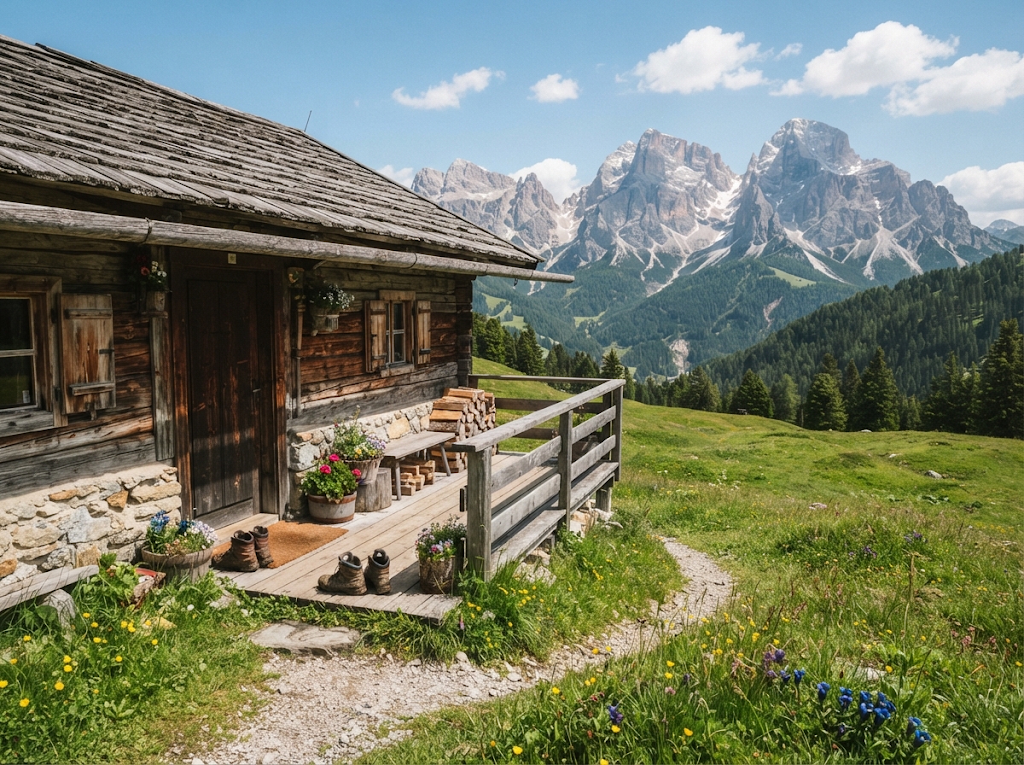
At two thousand metres, a wooden hut with a warm stove and a pot of soup is a small miracle. The Alpine huts of Bavaria, Austria and South Tyrol shelter thousands of hikers every summer, many of whom come from Britain, the United States and Australia. They arrive tired, hungry and often confused by the rules: When should dinner be reserved? Why must boots stay at the door? What does the hut warden mean by a sleeping place? On a mountain, information is part of safety, and a hiker who understands the hut rules and the weather warning makes better decisions. This guide explains how huts, tour operators and mountain clubs can prepare English materials for visitors.
The Hut Culture Visitors Do Not Know
Alpine huts run on shared customs. Guests sleep in dormitories, bring their own liner sheets, leave boots in a boot room and eat at fixed times. Many huts accept only cash, and some close in bad weather. These habits are obvious to locals but not to visitors, and unspoken rules cause friction. A short, friendly guide on arrival or on the booking page prevents most of it.
Booking and Cancellation
Reservations should state the number of beds, the price for half board, the arrival time and the cancellation rule. Explain what happens if the weather turns bad, if a path is closed or if a group arrives late. Give the phone number of the hut and the best time to call. Many mountain clubs, such as the German Alpine Club at alpenverein.de, publish hut information and standards that you can use as a model.
Safety First, in Clear Words
Safety notices must be unambiguous. Explain the weather signs, the rules for descending after dark, what to do in a thunderstorm and how to call for help. Emergency numbers, rescue procedures and the information a caller must give should appear in English next to the phone or at the door. Use pictograms for common hazards, such as rockfall and snow fields.
Route Descriptions
A route description should include distance, time, climb, difficulty grade, water sources and objective hazards. German terms for paths, such as Steig, Weg and Klettersteig, mean different degrees of difficulty, so explain them once and use them consistently. Give times in hours and minutes, not vague terms like short. Mention the last point where you can turn back safely.
Language Support
Mountain clubs and tourism offices often use a german translation services provider to prepare route guides, hut rules and safety notices in English. A translator who knows outdoor terms can keep the guidance precise, and a review by a mountain guide or hut warden ensures that every instruction works on the ground. Share photos and maps so that the terminology matches what hikers see.
Menus and Food
Hut menus feature regional dishes, many of which have no English equivalent. Keep names like Kaiserschmarrn or Knödel, and add a short description. Mention vegetarian, vegan and gluten-free options, and say how early guests should order. Explain that portions are generous, that water is free and that tipping is welcome but not required. For guidance on another popular language pair that visitors often use, see this article on German to English translation.
Environment and Respect
Huts depend on fragile systems: water supply, solar panels, waste carried down by helicopter. Ask guests to save water, take rubbish home and stay on marked paths. Explain why in simple words. Visitors respect rules more when they understand that the hut warden carries supplies up on his back.
Insurance, Rescue and Costs
Mountain rescue can be expensive, and not all travel insurance covers it. Encourage guests to check cover before the trip, and explain the services of local rescue organisations. Provide a short note on membership benefits of alpine clubs. Do not give medical or legal advice, but point to official sources.
Digital Information
Many hikers check weather and route conditions on their phones. Provide a simple page in English with updated conditions, phone numbers and links to official forecasts. Check that the site loads quickly on a weak signal, and offer a printable version.
Groups, Schools and Guides
Group leaders need detailed information: number of beds, meal times, space for equipment and rules for noise. Prepare a one-page sheet for them with a checklist. Guides who work with international clients should have a glossary of terms for equipment, weather and technique in both languages.
Welcome as a Habit
A well written English page, a friendly boot-room sign and a warden who knows ten phrases of English turn a foreign visitor into a regular. Keep a glossary, review the texts each season and ask guests what confused them. The mountains are demanding enough, so the words should be easy.
Children, Dogs and Accessibility
Families and dog owners need to know what is allowed. State whether children can stay in the dormitory, whether dogs may enter the dining room and whether the path to the hut is suitable for strollers or reduced mobility. Honest information keeps expectations realistic and avoids disappointment at the end of a long climb.
Weather Windows and Seasons
Huts open and close with the season, and snow can change the route in a single night. Publish opening dates, last-entry times and the date when cable cars stop, and update them as soon as they change. A hiker who knows that the last cable car leaves at five can plan the descent.